
Van der Waals materials & devices
A Universe of 2D Crystals Awaits Exploration

Overview Of Layered Quantum Materials
Atomically thin two-dimensional (2D) materials have attracted tremendous research interest for both novel fundamental physics and extremely appealing applications. For example, new emerging physics such as half-integer quantum Hall effect, Klein tunneling, valley Hall effect, and topological superconductivity have been reported in 2D materials. The traditional material discovery is mainly based on trial-and-error experiments, which are time-consuming and resource-intensive. To accelerate the development of novel advanced materials, the US White House launched the “Materials Genome Initiative” in 2011 (https://www.mgi.gov/). This approach integrates high-throughput computation and data analytics with experimental research and represents a new paradigm for materials discovery. Data-driven material discovery can significantly reduce the cost of many lengthy trial-and-error experiments by providing the most promising candidates from high-throughput computations. In this spirit, large repositories with millions of computed bulk material entries have been developed such as the Materials Project (MP), the Open Quantum Materials Database (OQMD), the Automatic Flow for Materials Discovery (AFLOWLIB), and the Novel Materials Discovery (NOMAD) Laboratory, thanks to the development of computing power and significant advancements of the accuracy of first-principles calculations. Several open-source databases specific to 2D materials such as Inorganic Crystal Structure Database (ICSD), the Crystallographic Open Database (COD), and 2D Materials Encyclopedia (2DMatPedia) database, have also emerged rapidly through exfoliation, substitution, or de novo generation methods.
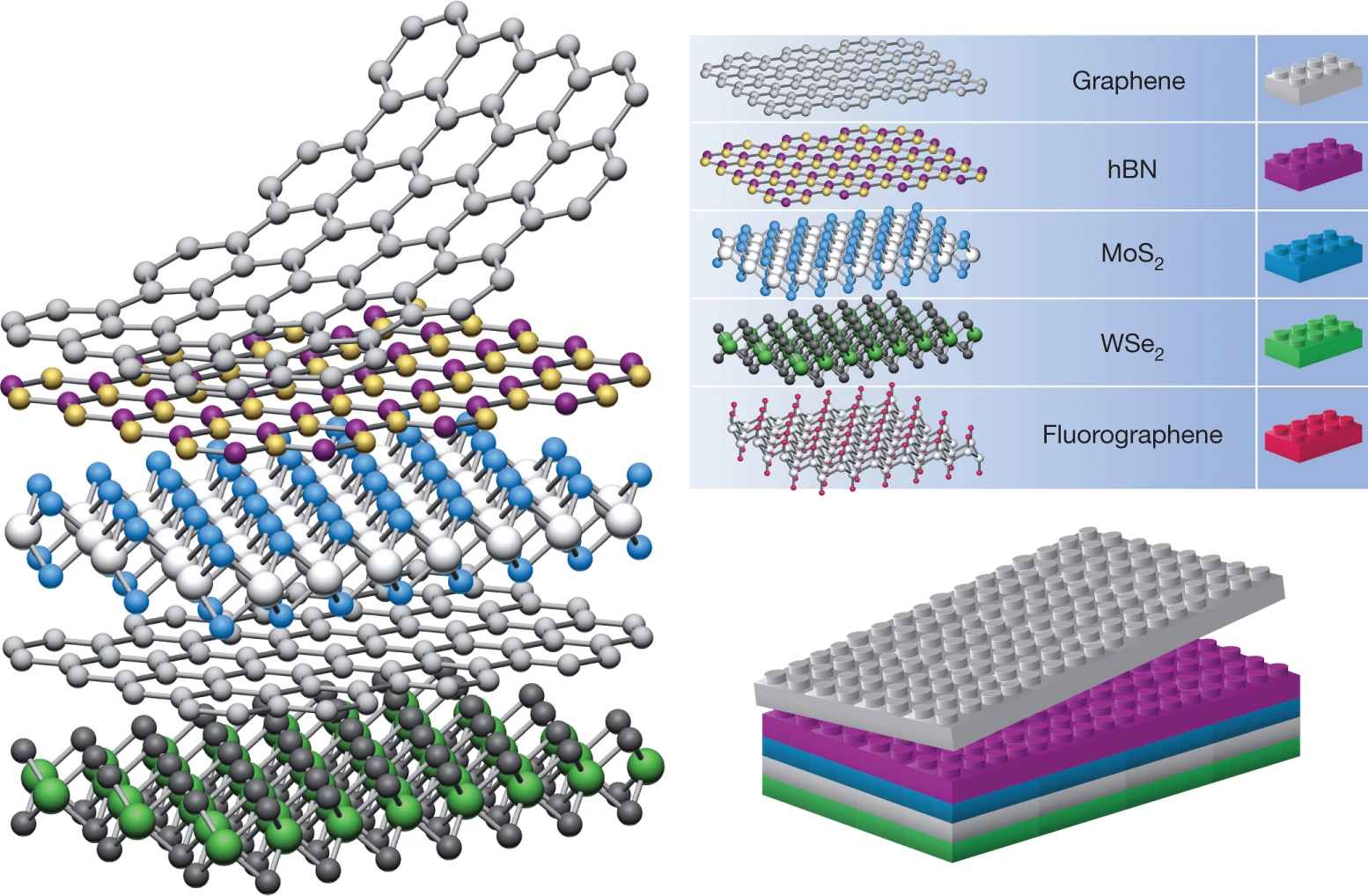
By screening all the possible layered bulk materials from the 3D material databases, theoretically exfoliating them into monolayers, and then systematically generating new 2D materials by elemental substitution, more than 6,000 inorganic 2D structures have been generated. The number of 2D materials is significantly larger when considering hybrid organic-inorganic layered materials (e.g., 2D perovskites) and all-organic layered materials (e.g., 2D polymers and COFs). In addition, 2D materials offer a platform that allows the creation of van der Waals (vdW) heterostructures of different 2D materials in various stacking arrangements. It essentially creates a nearly limitless library of materials with unique properties beyond what individual 2D materials can offer.
Current Research
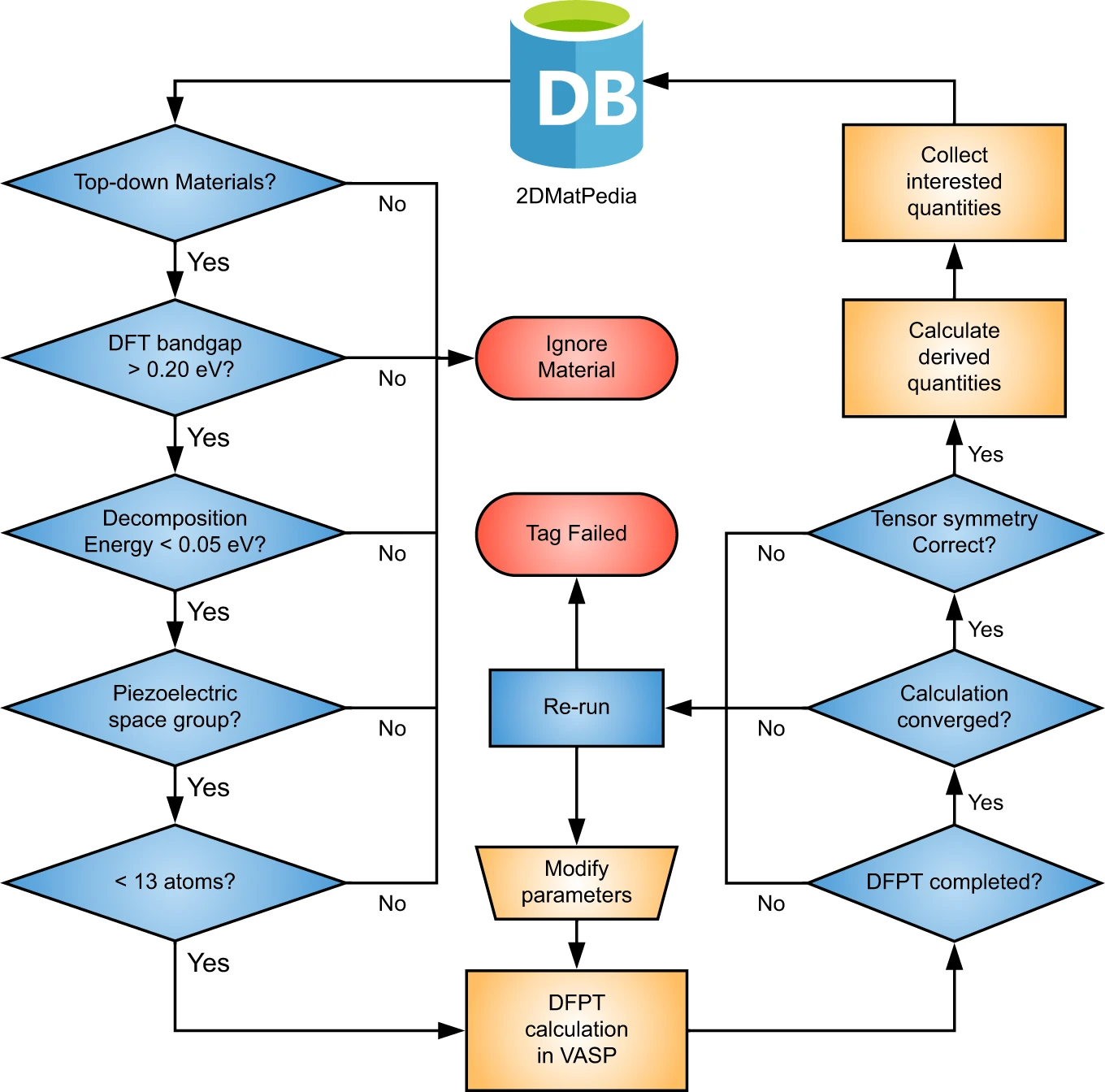
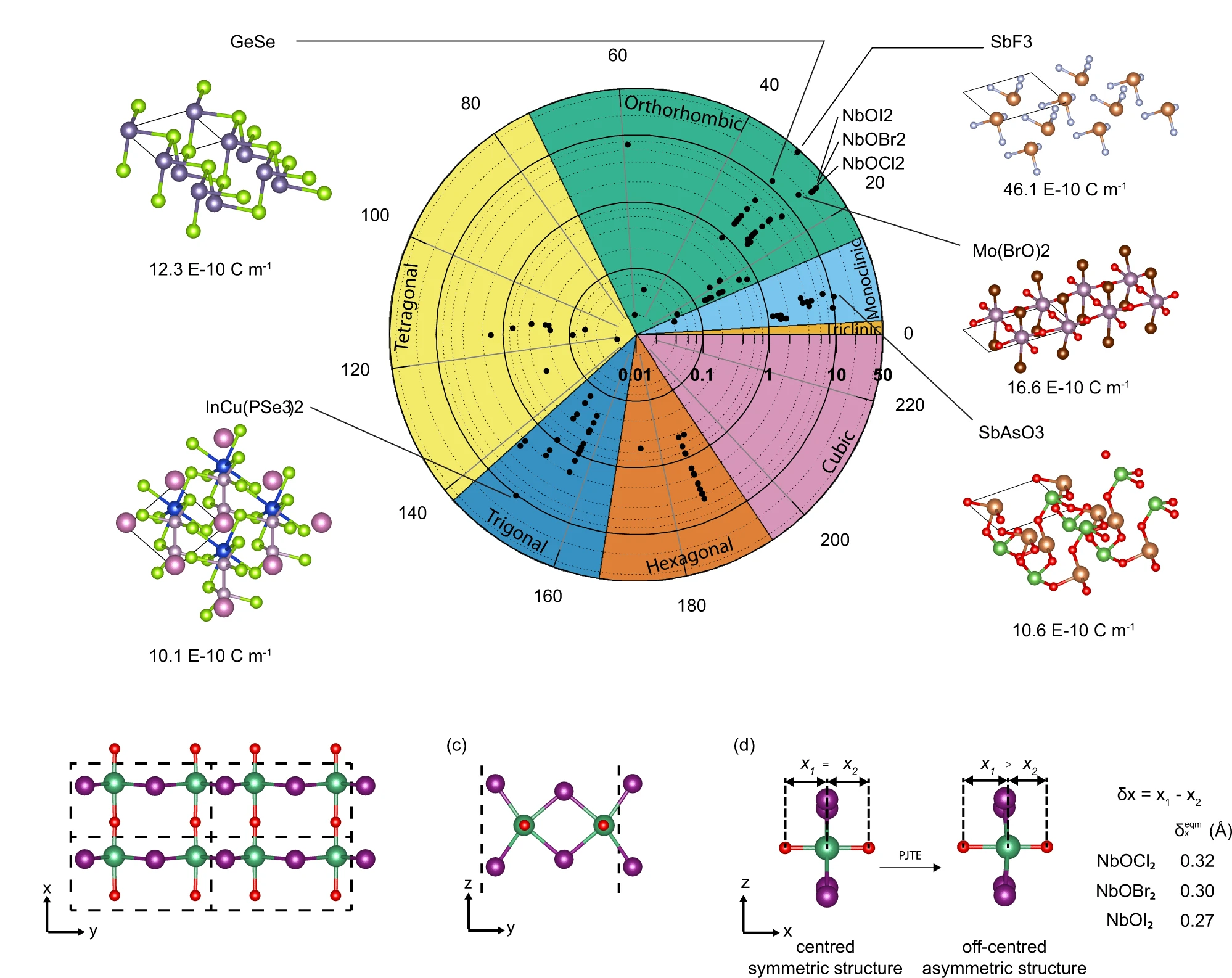
We combine first-principles atomic-scale calculations—including density functional theory (DFT) and molecular dynamics (MD)—to rapidly screen thousands of 2D structures and identify materials with properties tailored for targeted applications (see, for example, Nature Communications 2022). Our methodology uses high-throughput screening based on parameters such as band gap, decomposition energy, space group, and quantum geometrical properties. This approach enables the prediction of new quantum materials with novel or enhanced functionalities, including ferroics, high-temperature superconductors, complex magnets, and topological materials. Our research has advanced understanding in areas such as spin-orbit coupling (Science 2024), ferroelectricity (Nature Photonics 2022), ferroelasticity (Nature Materials 2018), piezoelectricity (Nature Communications 2022), magnetism (Advanced Materials 2019), multiferroicity (JACS 2023), ionic conductivity (Nature Chemistry 2017), and superconductivity (ACS Nano 2018).
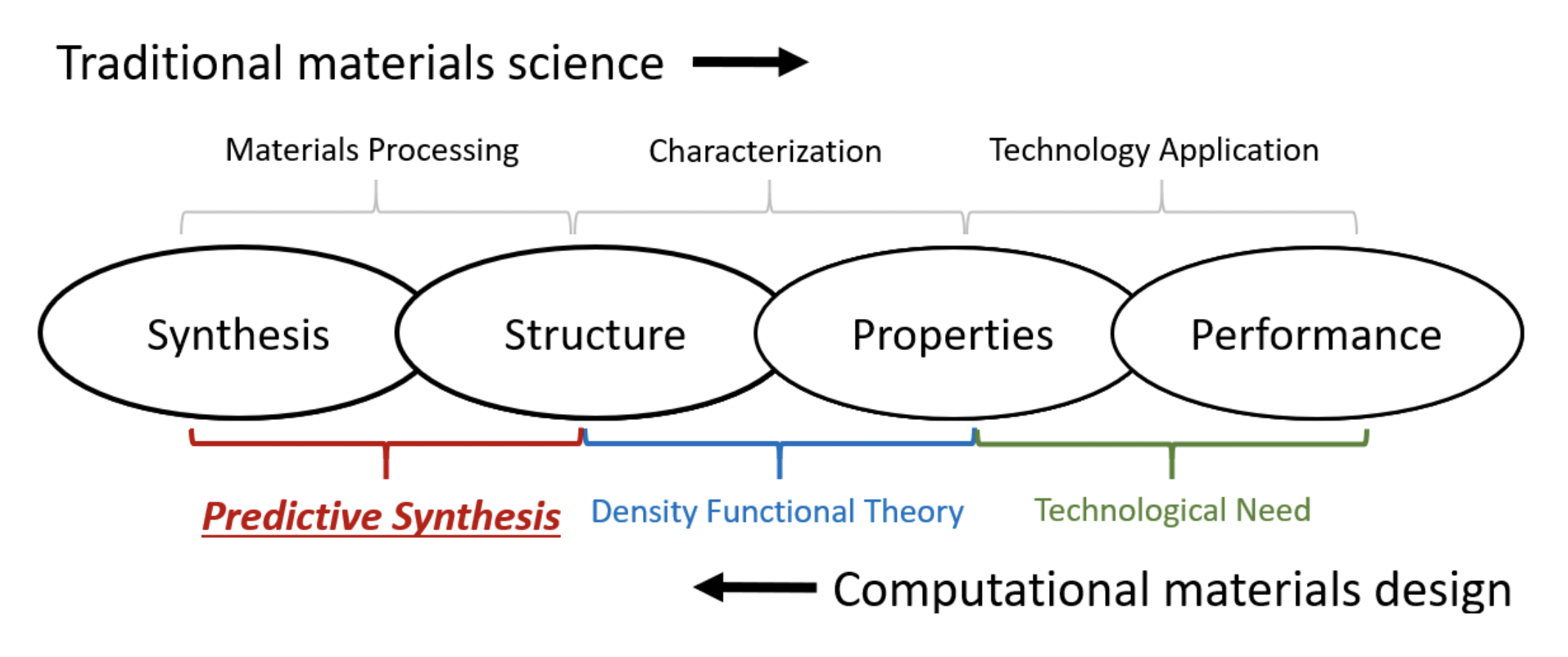
Our current experimental efforts focus on the low-thermal-budget synthesis of a diverse array of advanced 2D materials—including ferroic, hybrid, and metamaterials—using both bottom-up and top-down approaches. To validate the relationships between structure and properties, we utilize a comprehensive suite of characterization techniques. These include a range of scanning probe microscopies (AFM, PFM, MFM, KPFM, STM, PiFM, AFM-IR, s-SNOM), as well as TEM, SEM, EDX, XRD, XPS, SIMS, EELS, SQUID magnetometry, Raman spectroscopy, ellipsometry, ultrafast pump-probe, and nonlinear spectroscopies.
Materials Synthesis & Preparation
Top-down Synthesis
- Mechanical exfoliation (adhesive tape/AFM tip)
- Chemical exfoliation (intercalation)
- Chemical synthesis (sonication, oxide reduction)
- Electrochemical exfoliation (cathodic exfoliation)
Bottom-up Synthesis
- Chemical Vapor Deposition (CVD)
- Molecular Beam Epitaxy (MBE)
- Atomic Layer deposition (ALD)
- Molecular self-assembly
- Crystallization (solvent evaporation, cooling, antisolvent-assisted)
- Pyrolysis
Cryogenic Nanoscopy

Sustainable AI & Quantum Hardware

Facilities
